Eat

Know what's on your plate.
Without the tedious logging.

Point your camera at food. Eat estimates what's probably there, roughly what it contains, and whether it fits your goals and your gut — as honest ranges, never fake precision.

Join the waitlist How it works
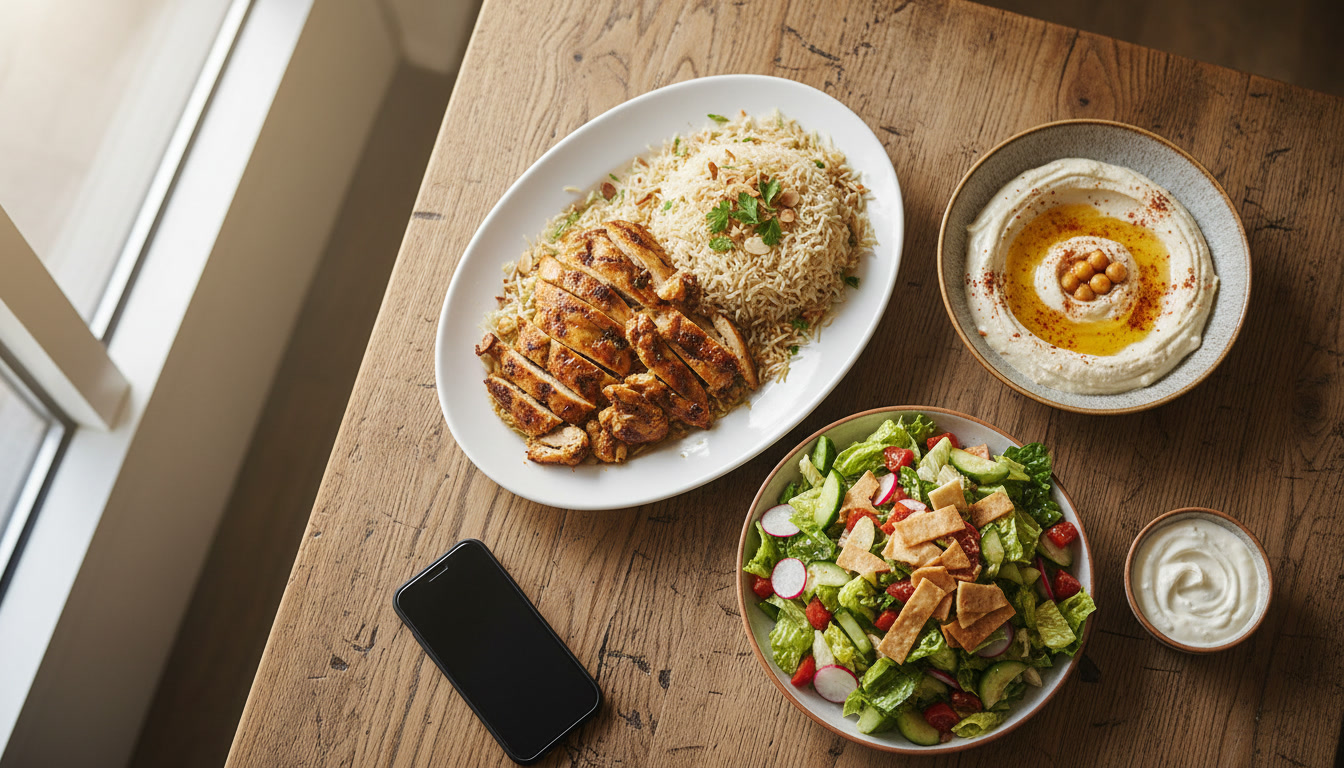
A warm Middle Eastern spread — shawarma plate, hummus, fattoush — photographed from above, a phone resting face-down beside it

Photo in. Decision out.

📷 Point, tap, done

The camera is the home screen. One photo — no barcode hunts, no searching a 2-million-item database for "grandma's curry".

🔢 Honest numbers

~720–850 kcal, not a fake "783". Every estimate shows its range and confidence, because two tablespoons vs five of sauce is a real difference.

🌍 Culturally fluent

Biryani, haleem, shawarma, jollof, bibimbap — named as themselves, not forced into "stew with rice".

Chicken biryani in a clay handi pot with steam rising

Home cooking and regional dishes get named properly — and estimated honestly.

🧠 It learns your table

Correct a portion once; next time it's already right. Your usual rice, your usual plate, your home recipes.

Gut fit, in plain language

Choose your contexts — reflux, IBS, gastroparesis, gluten-free and more — and every meal comes back with a plain-language read, one suggested change, and the reasoning. Draft rules built on public guideline principles; never a diagnosis.

Private by construction

No account. No feed.

Your meals live on your device. Export or delete everything with one tap.

Photos stripped first

EXIF — including your location — is removed before any photo is analyzed.

No ad economy

No trackers, no third-party ad SDKs, no selling "health signals". Ever.

Questions

Is this medical advice?

No. Eat is a nutrition and gut-comfort decision-support app. It never diagnoses, and its gut-fit guidance is general, plain-language education — discuss your condition with your clinician.

Can a photo really count calories?

Not exactly — and an app that pretends otherwise is lying to you. Eat shows what's probably on your plate as a range with a confidence level, narrows as you correct it, and tells you plainly when it can't tell (cross-contact, hidden sauces) rather than inventing certainty.

What about celiac disease?

A photo can never verify cross-contact. If a gluten-containing ingredient is visible, Eat says so. If not, it says preparation can't be verified from a photo — never "this is safe".

What does it cost?

Free at launch. Meal scanning, macro ranges, gut fit, history, learning — all free.

Be first at the table

iOS beta + web app, launching soon.

Join the waitlist